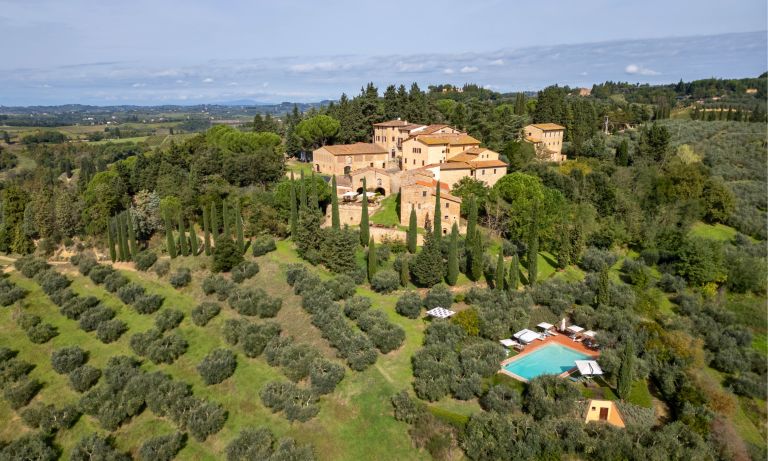


Imagine walking through centuries of European history, crossing a gate and entering the elegance of an era that shaped the continent: this is Carolina Bonaparte’s historic mansion. Just minutes from Lucca’s Renaissance walls, this royal residence holds five centuries of European heritage. Nestled among rolling hills and overlooking the timeless beauty of Lucca, the mansion blends aristocratic memory with contemporary luxury.
Here lived Carolina Bonaparte, sister of Napoleon and Queen of Naples. A woman of charisma and vision who left her mark on history and on this villa, turning it into a symbol of refinement and prestige.
To tell the full story of this mansion, we sat down with its owner for an exclusive interview: a conversation that unveils rare details, forgotten histories, and an entirely personal vision of one of Tuscany’s most extraordinary cultural treasures.
“Living in a home like this inevitably shifts your perspective: you come to understand, very clearly, that you own nothing at all, only the privilege of being its guardian for one chapter of its history.”
Carolina Bonaparte: The Queen Who Chose Lucca
Carolina was a queen and a passionate art collector, a woman of taste who transformed this Lucchese villa into an aristocratic retreat of absolute prestige. Between 1836 and 1839, she spent the last years of her life here, bringing with her artworks, furnishings, and precious textiles that still enrich the villa today.

As the owner recounts, Carolina stayed at the villa for just a couple of years, until she died in 1839, after which the property passed to her children, as evidenced by a remarkable notarial deed of the time, still bearing their signatures.
Yet her passage left a precise mark. Carolina introduced elements in keeping with the French taste of the era, bringing furnishings and refined solutions that far surpassed the standards of the local context.
Equally fascinating is the discovery that her sister, Elisa Bonaparte, lived right next door. She commissioned some of the most striking features in the park, such as the outdoor shell-shaped fountains with the dragon, still standing today as a vivid trace of the Napoleonic era.
“Rather than a romantic presence, what we sense today is a tangible legacy, consisting of architectural details, aesthetic choices and historical documents that continue to reflect the passage of these figures connected to Napoleonic history.”
This mansion is a direct connection to Europe’s cultural heritage. An extraordinary legacy where every room tells the story of 18th-century courts and the charm of a royal past.
“The villa of Carolina Bonaparte is far more than a historic residence: it is an irreplaceable cultural and artistic asset, destined for collectors, family offices, investors, and hospitality operators seeking a unique property in terms of prestige and potential.” – Andrea Busoni, General Manager at Dreamer Real Estate.
Discover the regal charm of the 16th-century Villa of Carolina Bonaparte in Lucca.
One of the Grandest 18th-Century Country Villa in Lucca
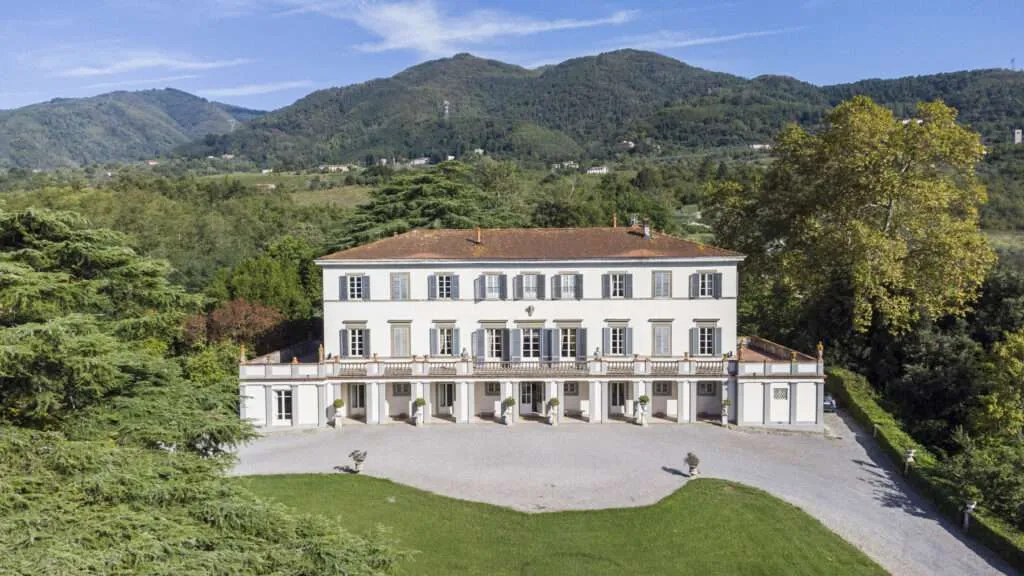
When Carolina Bonaparte, widow of Joachim Murat, acquired the property in 1836, she chose this mansion for its noble grandeur and refined cultural context. Originating in the 16th century, it had been transformed by the Orsucci family in the 18th century into a monumental country villa, rivaling the city palaces of Lucca. In this aristocratic and discreet city, Carolina found the perfect balance between her royal heritage and the beauty of Tuscany.
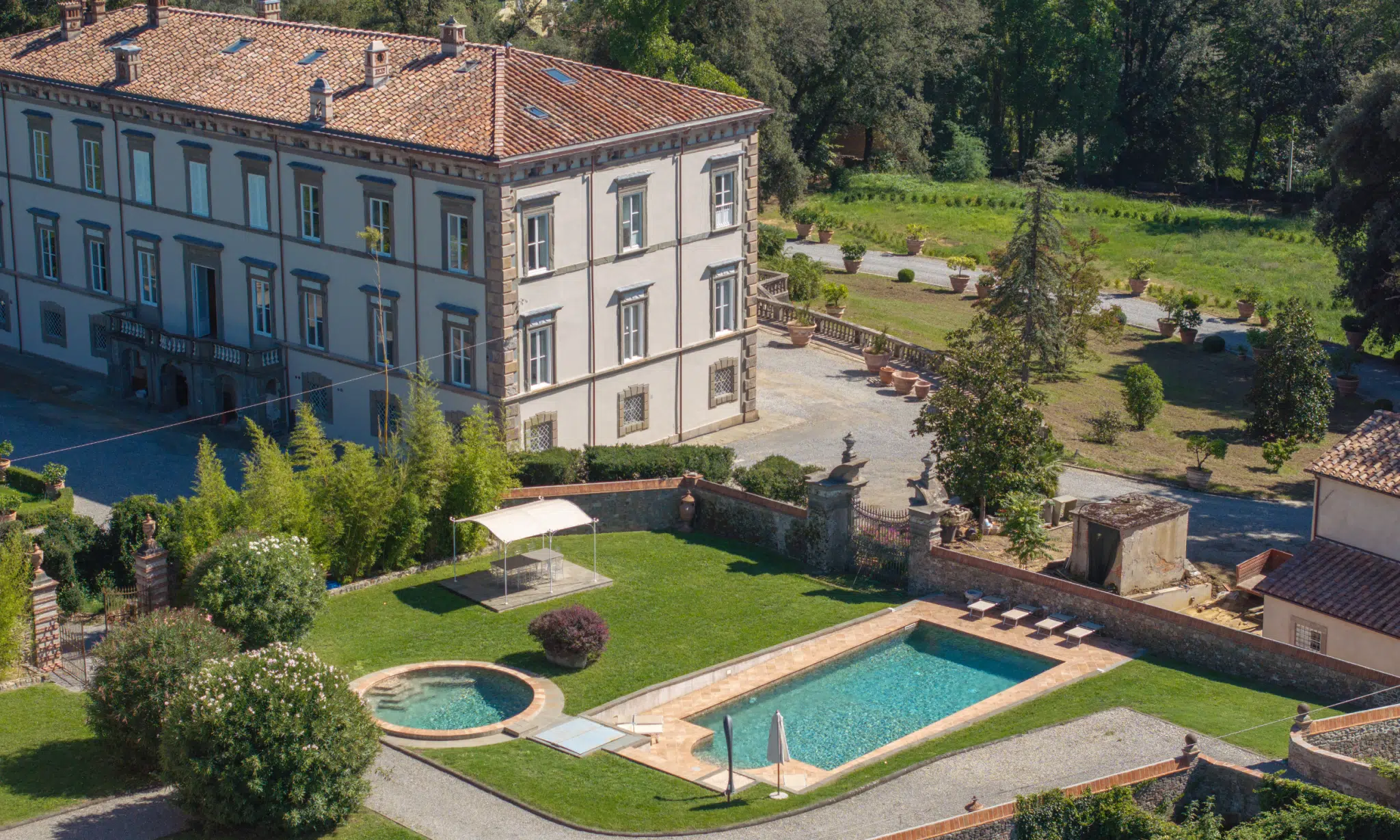
The history of the villa is bound to a succession of ownerships, each contributing to shape its identity. Among the most defining, as the owner points out, was that of the Orsucci family. They were a prominent Lucchese dynasty with deep roots in the silk trade. They were the ones who first conceived the mansion as something beyond a private home: a statement of power and culture, aligned with the great European estates of the time.
The encounter that would make this vision possible happened during a commercial journey to Messina along the silk routes, where Orsucci met Filippo Juvarra and recognised his genius. He persuaded the architect to come to Tuscany, entrusting him with the transformation of both the villa and its gardens into a residence worthy of the grandest European courts of the age.
Queen’s Villa
The villa soon became one of the most imposing country villas in Lucca, enriched with tapestries, artworks, and fine décor. Today is a living testimony to the greatness of the Bonaparte legacy, so much so that it was also known as the “Queen’s Villa”.
After her passing, the mansion remained a landmark for Italian aristocracy, passing into the hands of illustrious families such as the Tossizza and the Zanardi Prosperi marquises.
In the 20th-century, the property belonged for nearly a century to the Orlando family, one of the most influential dynasties in Italian industrial and naval history. It is during this period that a fascinating and little-known episode unfolds. The villa was frequented by Gabriele D’Annunzio, associated with the Orlandos through one of the most famous episodes in Italian history, the Beffa di Buccari, a legendary naval raid that entered the mythology of the nation.
“It is through this succession of owners that the villa’s current identity has been forged: a tapestry of different visions, all layered within the same space, which today constitutes its true value”, concludes the owner.
Each era left its mark, shaping the villa into a document of European history, where art, nature, and heritage coexist in perfect harmony.
Napoleon’s Sister Historic Villa in Lucca
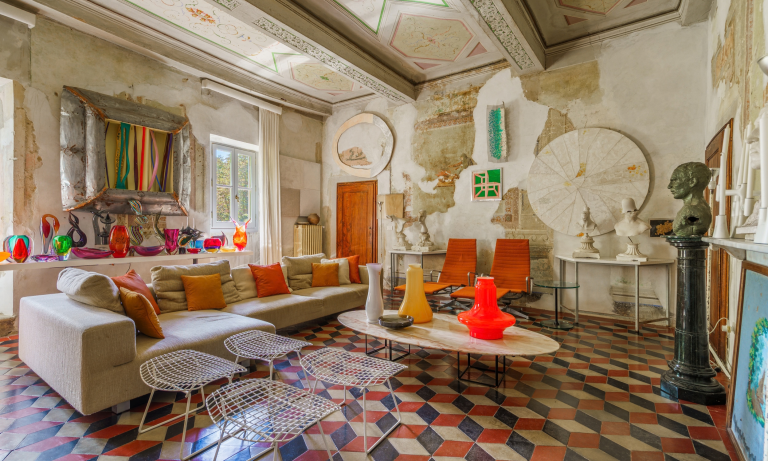
The Bonapartes’ Villa Interiors: A Stage for European Magnificence
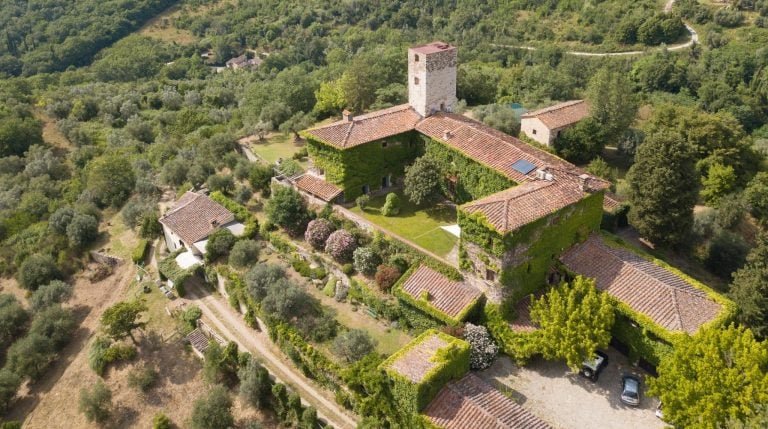
The luxury property in Lucca extends over 3,200 sqm in total:
- approx. 2,500 sqm for the main villa across three levels;
- plus 700 sqm across guesthouses and service buildings.
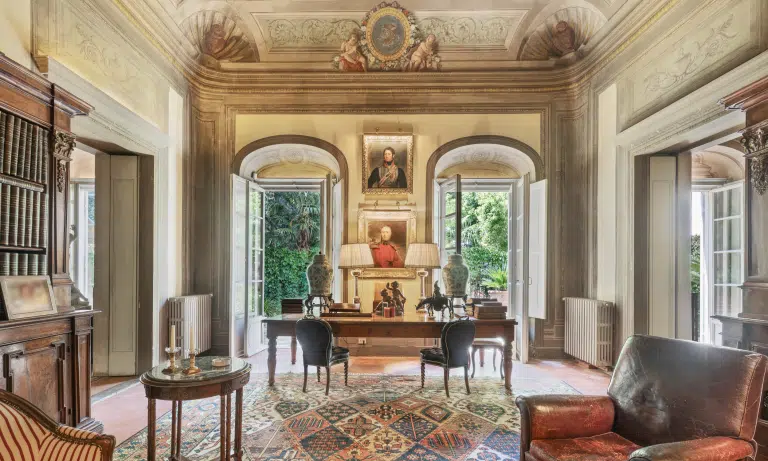
Its heart is the grand double-height hall, the largest in Lucca, with stuccoes by Sebastiano Puccini and two monumental paintings by Pier Dandini: The Battle of Ponte Milvio and The Rape of the Sabines.
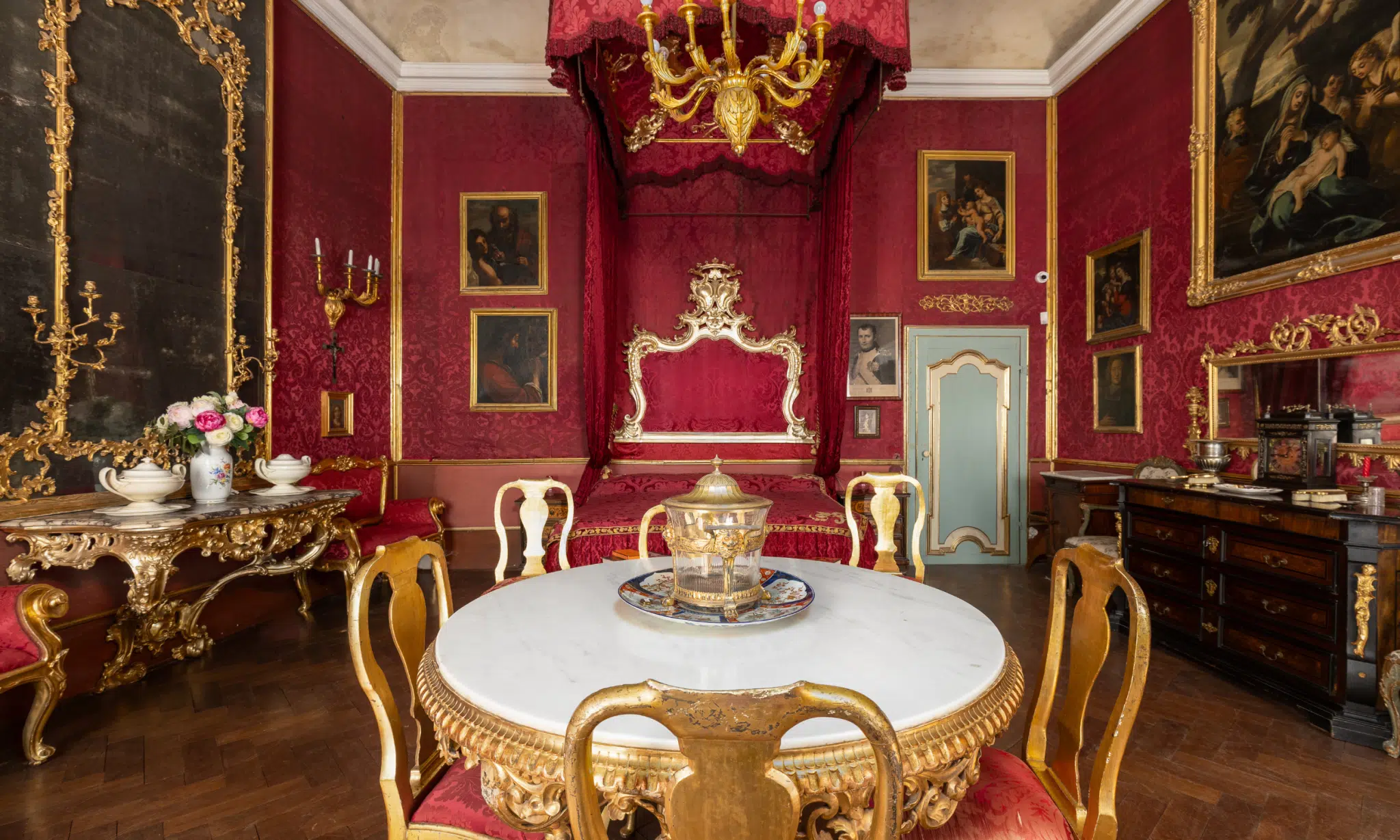
Among the villa’s most extraordinary spaces, the owner points to the Red Room, lined in silk, as the one environment capable of capturing the soul of the entire mansion:
“It is a space that perfectly encapsulates the identity of the villa, both aesthetically and historically. Inspired by the craftsmanship of the Vatican Museums, in the quality of its materials and the refinement of its finishes, it houses a bathtub believed to be original and connected to the Napoleonic tradition. More than any other room, it succeeds in holding together intimacy and grandeur, and in doing so, it returns to you the full depth of the villa’s history and its timeless fascination.”
It is no coincidence that Carolina Bonaparte chose this particular residence: the villa’s architecture, with its strikingly plastic and rational layout, spoke directly to the Neoclassical sensibility of the Napoleonic age. A compact, almost monolithic form in which every line answers to an idea of order and control. Stone bases, marble staircases, and the use of solid, enduring materials convey a sense of grandeur and stability. It is an austere villa, severe in its geometry, yet at the same time rich in the quality of its materials.
The façade, with its rusticated pilasters, Guamo stone cornices and sweeping double staircase, reflects the classical and austere style typical of a noble residential palace, with the influence of Filippo Juvarra clearly legible in the portal of the walled garden. The villa also retains its historic kitchens and an upper floor awaiting restoration. These spaces offer remarkable potential for contemporary living without compromising the historical soul of the residence.
Secret Gardens and Luxury Outdoor Spaces: 18th-Century Settings
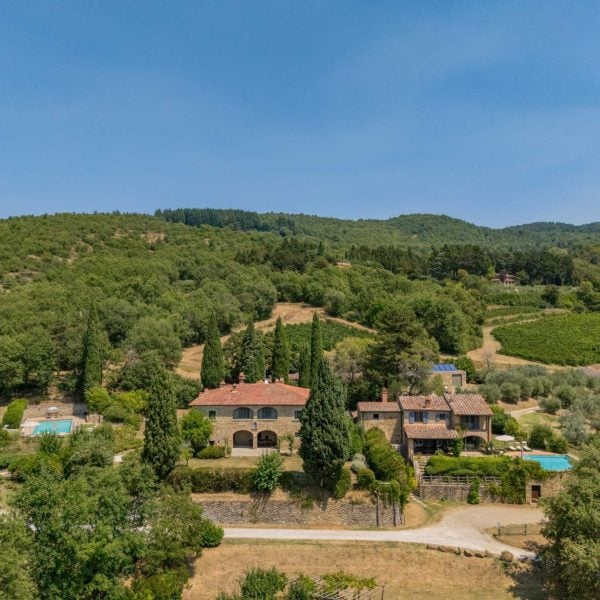
The six-hectare landscaped park of Carolina Bonaparte’s villa is a masterpiece of Tuscan garden art: gravel paths, flowering hedges, terracotta statues, and centuries-old trees. Among the most evocative features of the park, the shell-shaped fountains featuring a dragon and a Napoleonic eagle stand out, still functioning today. These dramatic sculptural elements, introduced during the Napoleonic era, are attributed, as the owner recalls, to Elisa Bonaparte, Carolina’s sister. They speak directly to the decorative sensibility that defined that extraordinary period in European history.
The property also includes:
- a guesthouse with 5 independent suites;
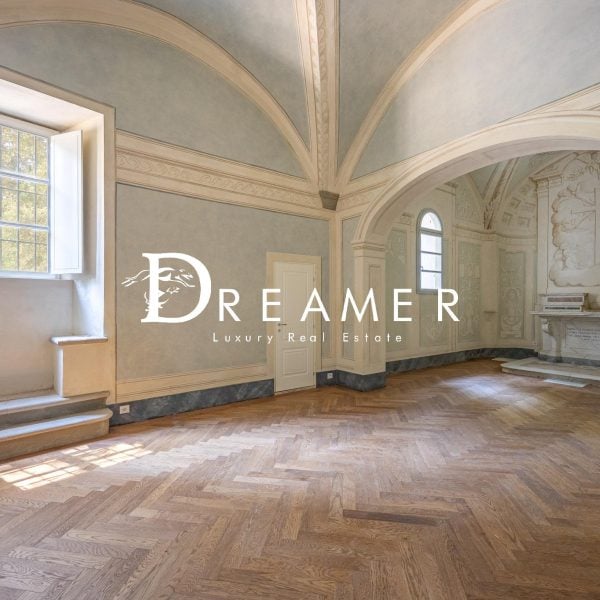
- a private 18th-century chapel;
- the restored 200 sqm Limonaia, ideal for events and exhibitions.
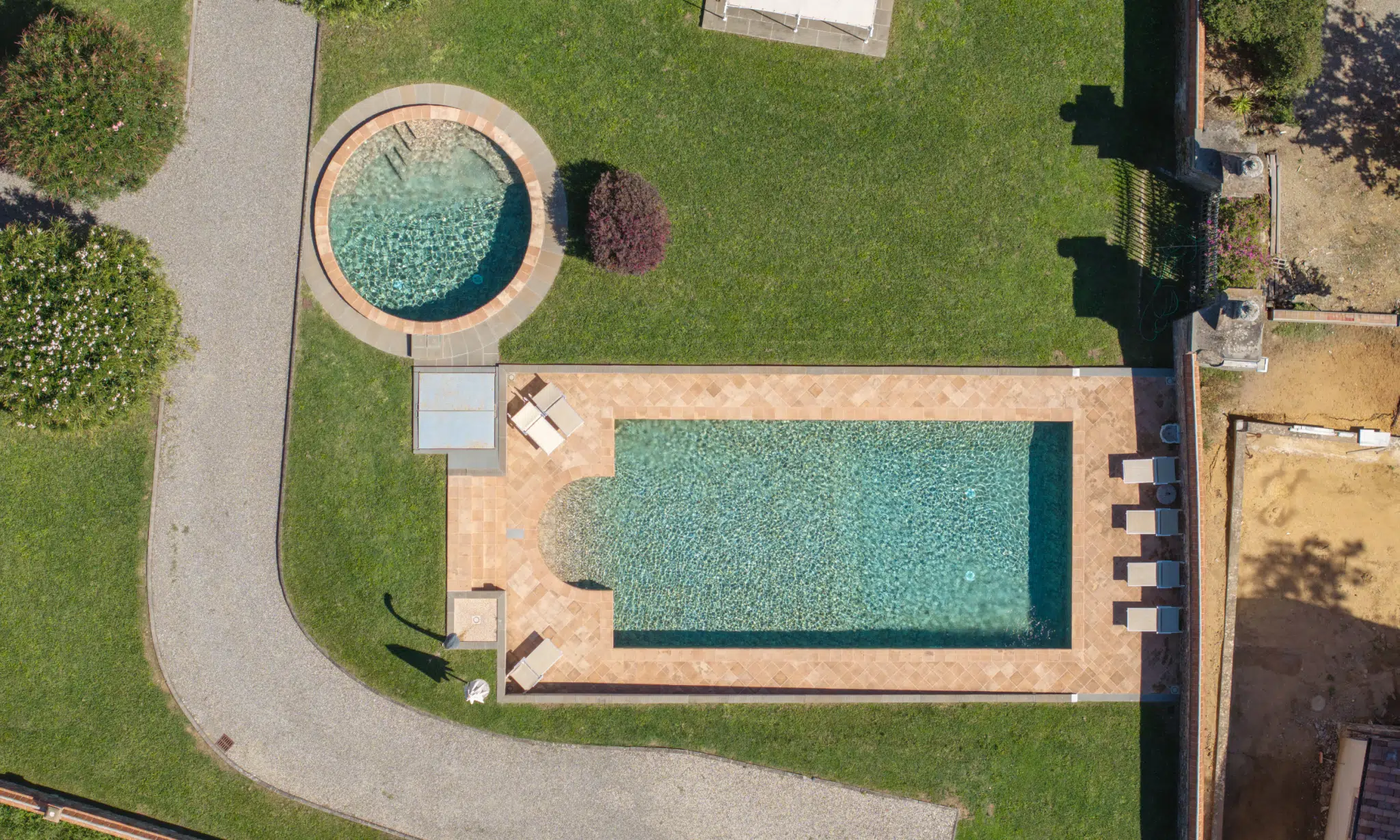
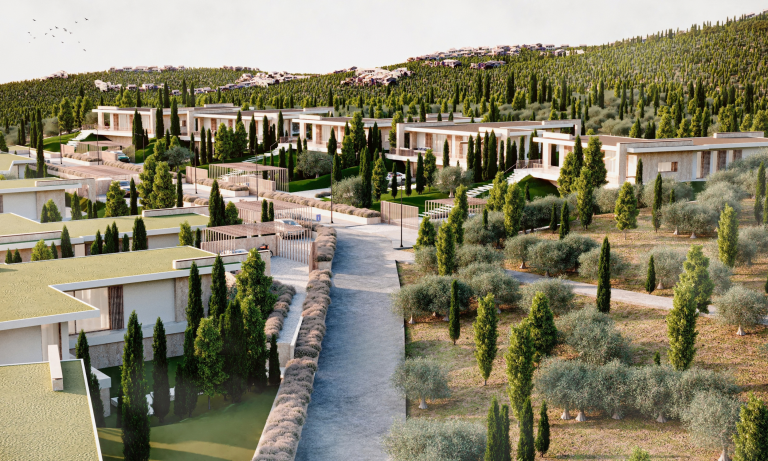
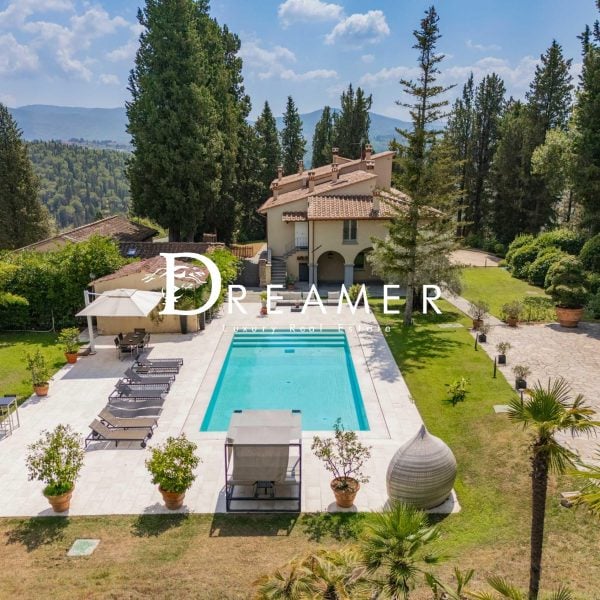
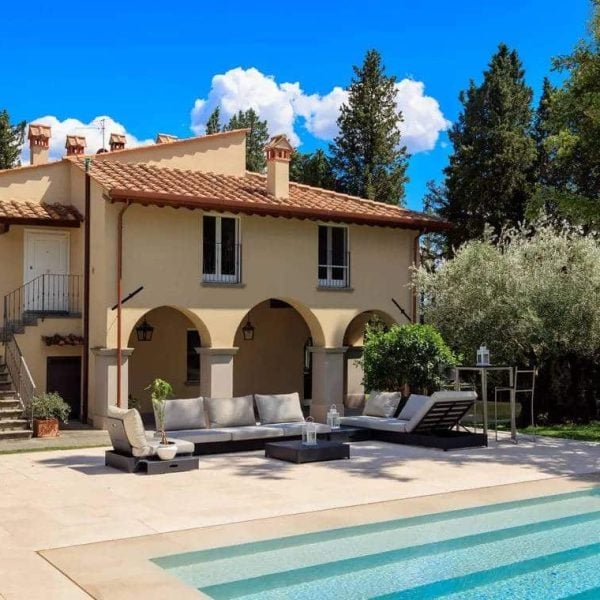
2 panoramic swimming pools, spacious lounge areas, a gazebo, and a hot tub create an exclusive outdoor lifestyle. Already authorized projects open the possibility for a wellness area, a third infinity pool, or even a private helipad, making the mansion ready for contemporary luxury living.
“The feeling of crossing the threshold of this residence is unique: the silence of the park, the light filtering through the grand windows, the frescoes narrating centuries of life. It is not just a villa, it is a journey through European memory, a place that welcomes and envelops you with its extraordinary energy.” – concludes Andrea Busoni.
Step into the world of the Bonaparte mansion: explore the gallery and book your private visit with Dreamer Real Estate.
The Bonaparte Legacy in Lucca: A Prime Location for Investment in Tuscany
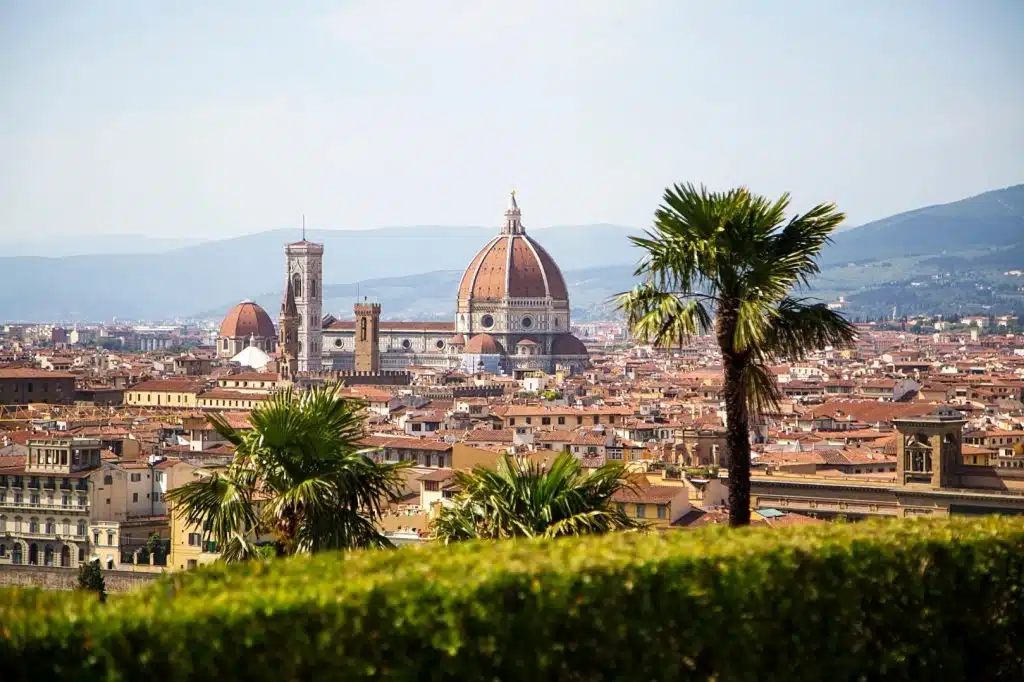
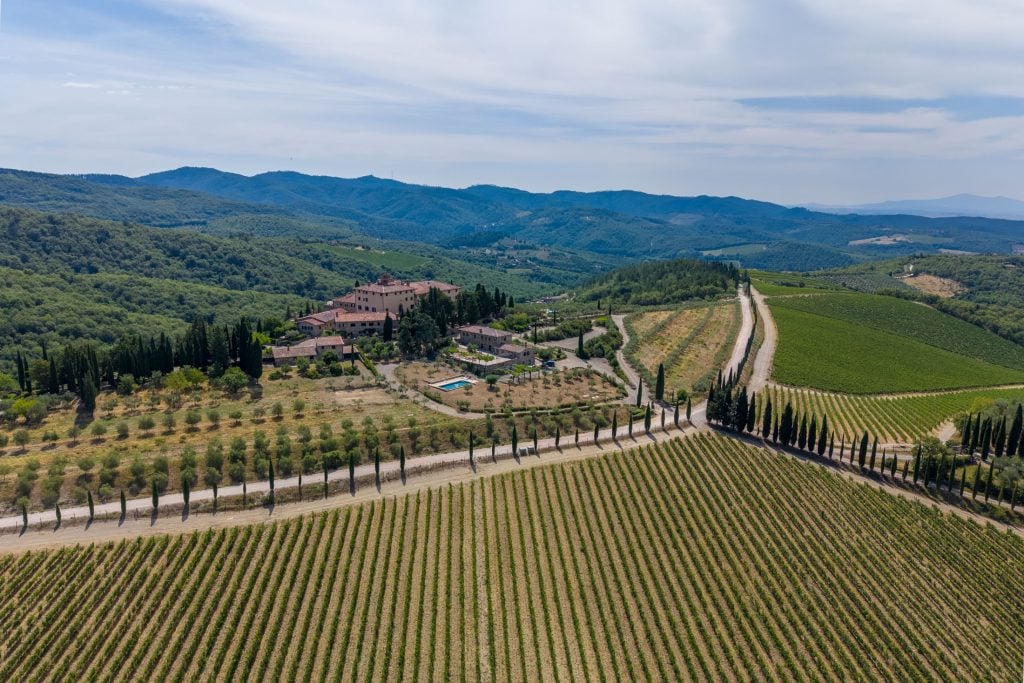
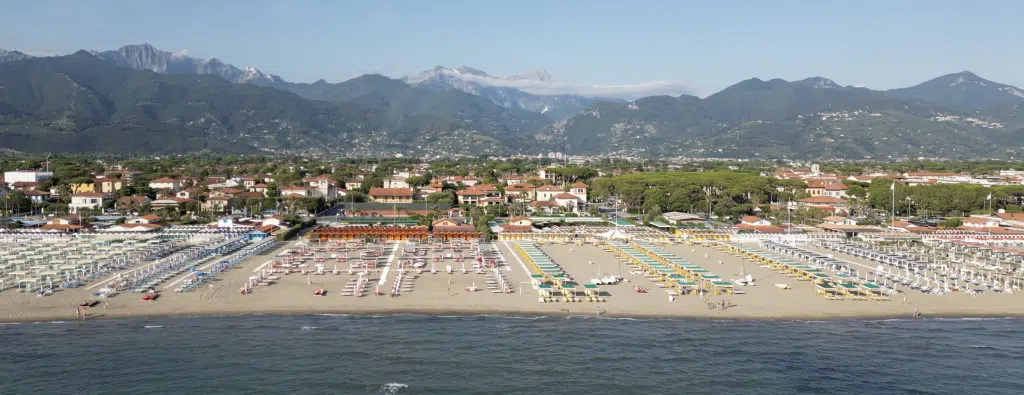
The villa’s location adds to its prestige. Nestled in the quiet of Lucca’s hills, just minutes from the historic city center and within easy reach of Pisa, Florence, and the Versilia coast. A perfect blend of privacy and international connectivity, ideal for those seeking a luxury residence, a high-value real estate investment, or opportunities in the hospitality sector.

The Lucca territory, as the owner observes, is historically one of the most concentrated areas of historic residences in Italy. It is a living testament to the splendour once achieved by the local nobility. The area of Segromigno in Monte, in particular, stands as one of its most significant expressions. A countryside punctuated by villas of exceptional architectural and cultural standing, forming a landscape of rare historical depth. It is a setting that speaks to a discerning audience, one capable of appreciating not only aesthetic beauty, but the layered history and the strong sense of identity that defines these places. A landscape so distinctive, in fact, that it has served as the backdrop for celebrated Italian film productions, both within the villa and in the surrounding area.
Lucca is among the most sought-after markets for luxury homebuyers in Italy. Its province holds the country’s highest concentration of premium properties in the €1-3M range. International demand for historic villas is rising steadily, making this royal mansion not only a lifestyle purchase but also a strategic long-term investment. Read here Historic Homes for Sale: The Mansions of History’s Most Illustrious Figures.
Luxury and Heritage: The Ultimate Royal Villa Investment in Lucca
Stepping into Carolina Bonaparte’s villa means experiencing centuries of art, aristocracy, and European history. Every room, every garden, every architectural detail recounts the life of a queen, the grandeur of an era, and the timeless harmony of Tuscany.
A wish echoed by the owner herself, who envisions for this mansion not a future, but a continuity of sensibility:
“May this villa always be inhabited by those who can recognise and honour its essence. Places like this are never truly owned: they are simply passed through.”